A Day In The Life
 At Matchbook
At Matchbook
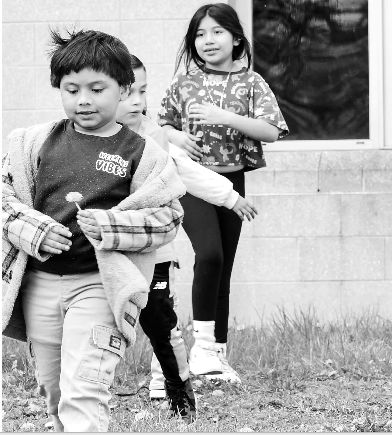

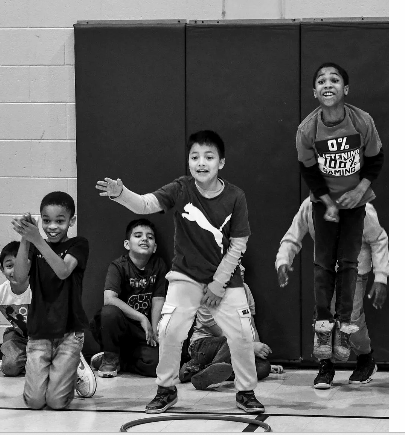
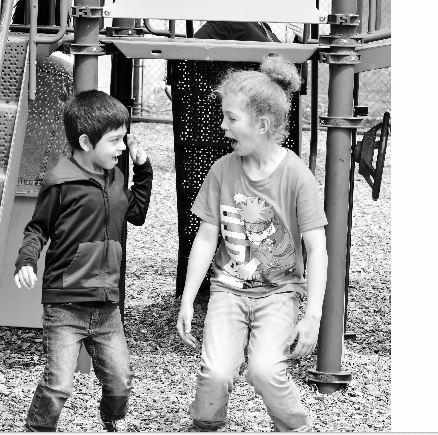
Every child is known, loved, and flourishing. We personalize learning within a restorative community — fostering resilience and excellence, and preparing students for real-world opportunities.
I am a Matchbook Learning Cardinal. I take pride in my home, my school, and my community. Learning is my top priority. I respect my families, my teachers, my classmates, and myself. I use the words please, thank you, please stop, and excuse me, because I am courteous and I want people to respect and listen to me. I am smart, talented, and peaceful — therefore, I will achieve.
This handbook is your family-facing operating manual for the year — how we start each day, how we partner with you, how we support every learner, and what we promise one another. Keep it close.
Every child is known, loved, and flourishing.
We personalize learning, within a restorative community, fostering resilience and excellence while preparing students for real-world opportunities.
Our students always come first.
We seek new ways to improve our work.
We hold ourselves and our students to the highest possible standards.
Two minds are better than one.
There is not a single moment to lose.
We never miss a chance to do the right thing.
Dear Matchbook Learning Students & Parents/Guardians,
Welcome to Matchbook Learning at Wendell Phillips School 63! My name is Nathan Tuttle, and it is an honor to serve as your Head of School. On behalf of our entire team — welcome to the 2026–2027 school year.
At Matchbook Learning, we are deeply committed to providing a safe, supportive, and rigorous environment where every student is known by name, known by strength, and known by need. We are proud to be in the Haughville neighborhood, and we celebrate the diverse community we serve.
We hold high expectations for our students and for ourselves. Your child's safety and learning are our top priorities. With the right support and opportunity, every student can achieve excellence and build the skills needed for college, career, and life.
Parents and guardians are our most important partners. Stay engaged — check PowerSchool regularly, attend conferences, read our communications, and reach out to us any time. We look forward to an outstanding year together.
These three expectations guide how we treat each other, how we use our space, and how we show up every day — in classrooms, hallways, the cafeteria, and at school events.
Students protect bodies, words, materials, and shared spaces.
Students use appropriate voice, language, and space, and care for others.
Students follow routines, complete the next right step, and repair when needed.
At Matchbook Learning, we provide a rigorous, personalized, standards-aligned education. Core subjects — English Language Arts, Mathematics, Science, and Social Studies — are taught using high-quality, research-based materials aligned to Indiana Academic Standards (Savvas MyView, enVision Math, and MyPerspectives).
Every student's education is built around them, not a fixed pace or one-size-fits-all path. Students advance by demonstrating mastery — teachers track where each student stands and adjust instruction, pace, and support so every child works at the right level of challenge.
Our five competencies name the skills and character we want every Matchbook student to carry beyond our walls. They shape the proficiency scale used for grading and are the focus of each student's monthly conference.
I take charge of my own learning. I set goals, track my progress, reflect on how I'm growing, ask for help, and do my best work.
I work well with others toward a shared goal, and I value everyone's ideas.
I share my ideas clearly, and I listen to others and build on what they say.
I take responsibility for what I do, follow through on what I say, and treat my school community with respect.
I keep trying even when something is hard, and I use feedback to get better.
Every student meets one-on-one with their homeroom teacher once a month to celebrate successes, identify barriers, and set personal goals.
Beginning this year, all students should attend their Parent/Teacher conferences on October 9th and March 19th to lead the conference with their families.
| Role | Name | |
|---|---|---|
| Head of School | Nathan Tuttle | ntuttle@matchbooklearning.com |
| Assistant Principal of Instruction | Lanea Garrett | lgarrett@matchbooklearning.com |
| Director of Academics | Amanda Kayte | akayte@matchbooklearning.com |
| Director of Culture & Student Support | Marlitha Williams | mwilliams@matchbooklearning.com |
| Director of MLL & MTSS | Jennifer Venturi | jventuri@matchbooklearning.com |
| Special Education Coordinator | Whitney White | wwhite@matchbooklearning.com |
| Director of Competency-Based Learning | Kelsey High | khigh@matchbooklearning.com |
| Director of Community Engagement & Events | M. Ornelas | mornelas@matchbooklearning.com |
| Dean of Students | Michael Land | mland@matchbooklearning.com |
| Dean of Students | Ronald Blades | rblades@matchbooklearning.com |
| Dir. of Enrollment / McKinney-Vento | Natalia Ramos | nramos@matchbooklearning.com |
| If you need… | Start here |
|---|---|
| Attendance help or absence reporting | Call the main office by 9:00 AM and keep documentation ready. |
| Academic progress | Check PowerSchool and communicate with the classroom teacher. |
| Behavior or student support question | Start with the teacher; for active Tier 2/Tier 3 support, use the named support contact. |
| Counseling, wellness, or resource support | Contact the counselor, social worker, or main office. |
| Title IX, harassment, discrimination, or bullying concern | Contact the main office or titleix@matchbooklearning.com. |
| Emergency pickup or contact change | Call the main office and update emergency contacts immediately. |
Parents and guardians are our most important partners. Here is how we stay in touch — and how to reach us when you need to.
| Channel | Use for | Your action |
|---|---|---|
| PowerSchool | Grades, progress, missing assignments, and records families can monitor. | Check weekly and contact the teacher with questions. |
| LiveSchool (culture tracking) | Positive recognition, concern messages, and behavior/culture trends when family access is enabled. | Ask: What value did my student practice? What evidence was recorded? |
| ParentSquare | Schoolwide messages, attendance communication, emergency/weather updates, reminders. | Keep phone/email current and turn notifications on. |
| Phone call | Urgent attendance, behavior, safety, pickup, or same-day concerns. | Answer or return calls promptly. |
| Non-urgent questions, follow-up, documentation of support plans. | Allow reasonable response time. | |
| Family meeting / conference | Attendance, MTSS, DBRC/CICO, behavior support, re-entry, academic planning. | Attend, share context, and agree on next steps. |
| Main office | Absences, early dismissal, emergency contact changes, visitor check-in. | Call before arrival when possible. |
Indiana law presumes non-custodial parents retain parental rights — including access to records, participation in conferences, and student pickup. If a court order limits access, the custodial parent must provide a current copy to the school.
Closings due to weather or emergency are communicated via ParentSquare, school social media, and local news. Keep your contact information current and have a plan for unexpected closings or early dismissals.
| Time | What's happening |
|---|---|
| 7:15 AM | Doors open — breakfast served |
| 7:35 AM | School officially begins — all students must be in class |
| 2:15 PM | Dismissal |
Students arriving after 7:35 AM are considered tardy and must sign in at the main office. Every minute of learning counts.
| Topic | Family-facing expectation |
|---|---|
| Arrival | Students should arrive with enough time to enter, eat breakfast if needed, and be in class by 7:35 AM. |
| Dismissal | Students are dismissed at 2:15 PM unless a published schedule says otherwise. |
| Early dismissal | Students must be signed out by a parent/guardian or authorized adult at the main office. No student is released to an unauthorized person. Keep your emergency contact list current. |
| Transportation changes | For student safety, transportation changes should be made through the main office using the approved process. |
| Visitors | Classroom observations require 24-hour advance notice and approval from the Head of School and classroom teacher. Field-trip chaperones must pass a background check. |
Matchbook students are transported via IPS / First Student. Riding the bus is a privilege that requires responsible behavior at all times.
For the full IPS School Bus Rules and Regulations, visit myips.org. Parents are responsible for reviewing bus rules with their children.
All visitors must present a state-issued photo ID upon entry. Parents and guardians who have completed a background check and been invited to assist must check in at the main office and wear a name badge at all times.
Every student participates in all four of these classes every week — these are not optional or rotational:
Weekly music instruction for every student.
Movement, fitness, and team play each week.
Hands-on science and engineering via the PLTW (Project Lead the Way) curriculum.
Pathway exploration and career planning.
Throughout the year, all K-8 students apply the skills they've built to meaningful, real-world projects — then present at our Celebration of Learning, a public showcase for families and the community. Dates are communicated in advance; families are strongly encouraged to attend.
| Score | What it means |
|---|---|
| 4 — Advanced | Exceeds the standard; independent application and extended thinking. |
| 3 — Proficient | Meets the standard with consistent understanding and application. |
| 2 — Developing | Approaching the standard; partial understanding, needs support. |
| 1 — Beginning | Limited understanding; needs significant support. |
| Letter grade | Percent range |
|---|---|
| A+ / A / A− | 90–100% |
| B+ / B / B− | 80–89% |
| C+ / C / C− | 70–79% |
| D+ / D / D− | 60–69% |
| F | Below 60% |
| Marking period | Dates |
|---|---|
| M1 — First Quarter | July 30 – October 2, 2026 (45 days) |
| M2 — Second Quarter | October 5 – December 17, 2026 (43 days) |
| M3 — Third Quarter | January 5 – March 12, 2027 (47 days) |
| M4 — Fourth Quarter | March 15 – May 26, 2027 (46 days) |
| Total Instructional Days | 181 |
Homework extends learning beyond the school day — completing Google Classroom assignments, finishing projects, or practicing skills for upcoming lessons. Communicate directly with your child's teacher about their homework expectations.
Regular attendance is essential to student learning, and Indiana law requires school attendance for all students. Students are expected to attend school on time every scheduled day. When a student must be absent, families and the school work together to resolve the reason and return the student to consistent attendance.
This policy applies to every student enrolled at Matchbook Learning at Wendell Phillips School 63, grades K–8. It covers daily attendance, tardies, early dismissal, excused and unexcused absences, chronic absence, truancy prevention, and withdrawal, transfer, or homeschooling.
A student is counted present whenever they are participating in a school-directed program — including the nurse, counseling, a restorative meeting, testing, related services, or an approved school activity. Time out of the classroom for school-directed support is not recorded as an absence.
Call the main office at (317) 226-4263 on the day of the absence or late arrival.
Give the reason for the absence, and request assistance if transportation, health, or housing is involved.
Send a written note on the day the student returns so the absence is coded correctly.
Review attendance in PowerSchool and contact the office if a date appears incorrectly.
For an absence expected to last more than three days, call the office to arrange work and support.
Keep phone numbers, email, address, and emergency contacts up to date with the office.
| Term | Definition |
|---|---|
| Excused absence | An absence for an approved reason, with the information the school needs to confirm it. |
| Unexcused absence | An absence that does not meet an approved reason, or that could not be confirmed after the school contacted the family. |
| Chronic absence | Missing 10% or more of the school year for any reason, excused or unexcused — about 18 days. |
| Absent student | Indiana’s truancy-prevention threshold: five unexcused absences within a ten-week period. |
| Habitual truant | Ten or more unexcused absences in one school year. Indiana law then requires the school to report. |
The following absences are excused when the school receives sufficient information to confirm the reason. Acceptable documentation includes a parent note, a healthcare-provider note, a court or agency record, or comparable verification.
When absences become frequent or prolonged, the school may request additional information or schedule a support meeting. A documented excused absence is not reclassified as unexcused because of that review.
Indiana law requires the school to count the following as attendance when the law’s requirements are met. No academic or disciplinary penalty applies, and the student completes missed work with teacher support.
A student is tardy after 7:35 AM and must sign in at the main office. Early dismissal is any departure before the end of the school day; a parent, guardian, or authorized adult must sign the student out at the main office. The school records the exact instructional time missed. Repeated tardiness is addressed through family conferences and the MTSS process.
To pick your child up early, please call the office before 1:00 PM at 317-226-4263 to let us know.
| Attendance point | School action | Family action |
|---|---|---|
| Any absence or tardy | The record is verified the same day, and the school contacts the family when no notice was received. | Call by 9:00 AM and send a note on the day the student returns. |
| An absence pattern develops | The attendance team contacts the family and connects available supports — transportation, health and mental-health services, housing and McKinney-Vento services, counseling, language access, and disability-related services. | Respond to school outreach and identify what support is needed. |
| Five unexcused absences in ten weeks | Indiana law requires written notice and an attendance conference. The team and family develop an Attendance Success Agreement of up to 45 instructional days with defined supports and review dates. | Attend the conference. A parent-selected representative may attend as well. |
| Ten percent of the year missed | A chronic-absence support plan is started or strengthened, with review of causes, needed services, and more frequent monitoring. This applies even when all absences are excused. | Participate in the plan and its review meetings. |
| Ten unexcused absences in the year | The student meets Indiana’s definition of habitual truant. The school verifies the record and files the reports required by law. Family outreach and the support plan continue. | Remain in contact with the school and continue the attendance plan. |
Housing instability, transportation needs, medical and mental-health conditions, disability-related needs, caregiving responsibilities, foster-care circumstances, safety concerns, and language needs are addressed through the appropriate school support and community services. Families are encouraged to contact the main office so those services can be arranged.
For a student with an IEP, a Section 504 plan, a service plan, or a documented disability-related need, attendance support is coordinated with that team and implemented consistently with the student’s plan. Attendance procedures are not used to delay a required evaluation, accommodation, placement, or service decision.
When a physical or mental-health condition is expected to prevent attendance for an extended period, the school reviews whether homebound, hospital, remote, or other instructional services apply. Documentation from a qualified healthcare provider may be requested, and medical information is kept confidential.
Students who are pregnant, in foster care, experiencing homelessness, or facing a severe or life-threatening illness receive the additional services and coordination required by Indiana and federal law.
| Situation | Procedure |
|---|---|
| Missed school without a withdrawal request | A student is not withdrawn solely for missing a number of days. Enrollment continues until the school confirms a valid withdrawal, transfer, or homeschool notice. |
| Withdrawal or transfer | Submit the school’s withdrawal documentation with the reason for withdrawal, the student’s next school, and current contact information. The school confirms the effective date and transfers records. |
| Homeschooling | Notify the school in writing. The withdrawal is processed under current Indiana requirements. An IDOE homeschool number is not required before homeschooling begins. |
Call the main office at (317) 226-4263 before 9:00 AM to report an absence, ask about an attendance record, request a meeting, or arrange support.
The Attendance Agreement (ATT-01) below confirms how families and the school partner on daily arrival, absence reporting, tardies, and attendance meetings.
| Family commitment | School support |
|---|---|
| Send the student to school every day, on time, ready to learn. | Monitor attendance daily and communicate concerns early. |
| Report absences to the main office by 9:00 AM. | Record attendance accurately and request documentation when needed. |
| Provide written notes or physician documentation when required. | Review absence patterns and help identify barriers. |
| Attend attendance meetings when requested. | Build a support plan or Attendance Success Agreement when needed. |
| Keep phone numbers and emergency contacts current. | Use ParentSquare, phone, and meetings to partner with families. |
This policy is reviewed annually and whenever Indiana law or Indiana Department of Education guidance changes. If any provision conflicts with state or federal law, the law governs. Governing authorities include IC 20-33-2, IC 20-33-2.5, IC 20-18-2, IC 20-19-3, 511 IAC 4-1.5-9, current IDOE attendance guidance, McKinney-Vento, IDEA, and Section 504.
Our culture is taught, rehearsed, and celebrated — not assumed. Adults teach expectations, recognize growth, support regulation, and partner early when students need more help.
When conflicts arise, our first response is restorative. We give students the opportunity to repair relationships, take responsibility, and grow. A dedicated Restorative Team supports students and staff every day.
Every classroom has a Brag Board where teachers celebrate class and individual achievements. Students — including middle schoolers — earn meaningful rewards like extra recess, free-choice time, or class-selected incentives.
Students participate in a daily 15-minute culture rehearsal — a predictable sequence that helps them start the day calm, connected, informed, and ready to learn.
| Move | Family-facing meaning |
|---|---|
| Regulate | Students settle their bodies and emotions so they are ready to learn. |
| Orient | Students understand the day, value, or focus. |
| Connect | Students build belonging through voice, greeting, or shared practice. |
| Practice | Students rehearse the value or routine they will need later. |
| Commit | Students name the action they will try during the day. |
| Transition | Students move from culture practice into learning with purpose. |
| Culture element | What it is | Ask at home |
|---|---|---|
| Morning Meeting | A daily culture rehearsal practicing Safe, Respectful, Responsible. | What was today's value? What commitment did you make? |
| Culture Camp | The first 10 days explicitly teach routines, regulation language, listening, sharing, repair, and leadership. | What routine did your class practice today? |
| Friday Cypher | A weekly celebration of growth, performance, voice, and evidence-based recognition. | What evidence showed growth this week? |
| Family Connection Wheel | Shout-out, growth, and partnership calls so families don't hear only hard news. | Share what helps your child at home. |
| DBRC / CICO | Daily feedback tools that help adults, families, and students track a goal and respond early. | Review progress calmly; focus on the strategy being practiced. |
Friday Cypher recognizes academic growth, leadership, repair, participation, performance, attendance growth, and clear evidence of Safe, Respectful, Responsible behavior — tied to what adults actually observe.
Matchbook uses a Multi-Tiered System of Support (MTSS) to match every student's needs to high-quality instruction, intervention, or enrichment — and to respond quickly.
All students receive schoolwide expectations, classroom routines, reteaching, and early family communication. Family role: reinforce Safe, Respectful, Responsible at home.
Some students receive targeted supports such as CICO, DBRC, mentor check-ins, and weekly review. Family role: attend the meeting and support the student's goal.
A few students need individualized planning, intensive support, behavior plans, or re-entry support. Family role: co-create the plan and attend review meetings.
| If your student receives… | It means… | How families can help |
|---|---|---|
| CICO | Check-In/Check-Out gives the student a positive adult connection at the start and end of the day. | Ask what goal they practiced and what helped. |
| DBRC | A Daily Behavior Report Card tracks a specific goal across the day — a support tool, not a punishment. | Review progress calmly; avoid using the score as punishment at home. |
| Restorative support | The student had help regulating, reflecting, repairing, or returning to class. | Ask what they learned, who was affected, and what support they need next. |
| Re-entry plan | The student is returning after a removal or significant support event with a plan. | Support the plan and communicate concerns early. |
Matchbook is a non-violent community. Physical aggression, threats, and harassment will not be tolerated and result in disciplinary consequences up to and including suspension or expulsion.
Bullying — including cyberbullying — results in consequences aligned with the Student Code of Conduct. Any student who experiences or witnesses bullying must report it to a teacher, counselor, or administrator. HIB policies apply on school grounds, at events, on transportation, and off-campus when behavior impacts the school community.
Matchbook is a non-uniform school — students may express themselves through clothing, as long as it meets the dress code at all times. When in doubt: would my Head of School be comfortable seeing me in this? If yes, you're good. If not, change it.
| Acceptable | Not acceptable |
|---|---|
| Any shirt or top free of inappropriate language or images | Sleeveless tops, tanks, anything exposing midriff, cleavage, shoulders, or back |
| Crewneck sweatshirts | Shirts referencing drugs, alcohol, tobacco, profanity, violence, or gangs |
| Quarter-zip sweatshirts | Shirts worn less than full length, tied, or knotted |
| Zip-up hoodies, sweaters & cardigans (worn over an appropriate shirt) | Coats, jackets, or blankets — must be stored in lockers |
| Acceptable | Not acceptable |
|---|---|
| Jeans, khakis, dress pants, sweatpants, joggers, leggings | Pajama/flannel pants, onesies, sheer pants, pants with holes |
| Shorts, skirts, dresses, biker shorts, cropped pants (worn at the waist) | Visible undergarments |
| Closed-toe shoes with a strap around the heel | Flip-flops, slides, slippers, house shoes, open-toe shoes without a heel strap |
| Religious head coverings, simple jewelry | Bandanas, durags, bonnets, non-religious head coverings, ski masks, oversized jewelry, indoor sunglasses, wireless earbuds |
Coats, jackets, vests, gloves, scarves, hats and all outerwear; clear backpacks, purses, fanny packs, totes, drawstring bags, and raincoats. Outerwear may not be worn in class — if cold, wear a hoodie or sweater.
Matchbook Learning provides students with school-issued Chromebooks to support classroom instruction and academic learning. School-issued devices remain the property of Matchbook Learning, must remain at school, and may be used only for approved educational purposes.
Students are expected to:
Technology access may be restricted or revoked when a student misuses a device, accesses inappropriate content, or intentionally damages school property.
Parents and guardians are expected to reinforce responsible technology use and encourage their child to properly care for the school-issued Chromebook.
A parent or guardian may be held financially responsible for up to $250 when a Chromebook is lost, stolen, or damaged because of the student’s actions.
Each parent or guardian must complete a separate Matchbook Learning K–8 Parent/Guardian Device Agreement for every enrolled student for the 2026–2027 school year. Completing the agreement acknowledges the school’s expectations for device use, care, appropriate digital content, damage reporting, and potential financial responsibility.
Cell phones, tablets, AirPods, earbuds, and personal electronics may not be used, visible, or accessible during the school day or at school-sponsored events during school hours. Devices must be powered off and stored in the student's backpack, locker, or cubby for the entire day. To reach your child urgently, call the main office at (317) 226-4263 — staff will notify the student immediately. The school is not responsible for theft or damage to personal devices. Internet access is filtered and monitored under the Children's Internet Protection Act (CIPA).
Matchbook Learning is a restorative school community. We teach expectations, recognize growth, repair harm, and help students return to learning whenever possible.
Restorative practice does not mean there are no consequences. It means consequences should help students understand impact, take responsibility, repair when possible, and learn the next right step.
Matchbook follows the current applicable Student Code of Conduct for student behavior, discipline, due process, family notification, suspension, expulsion, appeal rights, and student support. If this section conflicts with the official Student Code of Conduct, board policy, law, or required student-rights procedures, the official Code of Conduct, policy, and law control. Families are expected to review the Student Code of Conduct and this handbook section with their student each year.
The levels below help families understand how Matchbook generally responds to behavior. The response level depends on the seriousness of the behavior, safety impact, developmental factors, student needs, prior support, and applicable policy requirements. Serious or unsafe behavior may begin at Level 3 or Level 4 even if there has not been a prior pattern.
| Level | What it means | Possible Matchbook response |
|---|---|---|
| Level 1 | Classroom or school-based behavior that can usually be corrected with teacher support. | Reteaching, redirection, private correction, restorative conversation, reset, and family communication when patterns continue. |
| Level 2 | Behavior that continues after support or requires additional adult involvement. | Family partnership, counselor/dean/restorative support, MTSS review when appropriate, DBRC/CICO when appropriate, restorative repair, and in-school support when appropriate. |
| Level 3 | Behavior that significantly affects learning, safety, or the rights of others. | Administrator involvement, formal documentation, family notification, restorative re-entry plan, possible in-school assignment, out-of-school suspension, or other response according to policy. |
| Level 4 | Serious behavior that threatens safety, substantially disrupts school, or may require district-level, charter-level, or law-enforcement review. | Immediate administrative review, family notification, due process, possible suspension, expulsion referral, alternative placement consideration, or law-enforcement referral when required by law or policy. |
The Student Code of Conduct includes expectations and possible responses for behavior such as:
When a serious behavior concern is reported, Matchbook will follow required due-process procedures before making a formal disciplinary decision. The school will gather relevant information, give the student an opportunity to explain what happened, review available evidence, and determine the appropriate response under the Student Code of Conduct.
For suspensions or other formal discipline, families will receive notice of the reason for the action, the length or nature of the action when applicable, any required next steps, and any appeal rights available under the applicable Code of Conduct, policy, or law.
No student will be dismissed early, sent home, or removed from campus for disciplinary reasons without parent/guardian contact and administrative authorization, unless an emergency, safety procedure, health procedure, or legal requirement applies.
Suspension is used only according to policy and due-process requirements. When a student returns from suspension or another significant removal, Matchbook will create a re-entry plan whenever appropriate. A re-entry plan may include:
Family partnership is expected after a significant disciplinary event. When a family meeting is needed, Matchbook will make reasonable efforts to schedule it promptly. Return-to-learning planning should protect safety, dignity, accountability, and access to instruction.
Students with disabilities retain all protections required by IDEA, Section 504, Indiana Article 7, and school policy. Discipline decisions involving a student with an IEP, Section 504 plan, suspected disability, behavior support plan, or other protected status must follow required procedures — including team review, manifestation determination, service access, functional behavior assessment, or behavior intervention planning when needed. Nothing in this handbook limits a student's rights under an IEP, Section 504 plan, Article 7, or applicable law.
Families are essential partners in student conduct and support. Families can help by reviewing expectations at home, keeping contact information current, attending meetings when requested, supporting re-entry plans, notifying the school when a student needs help, and contacting the school early when concerns arise. Matchbook's goal is always to return students to learning with safety, dignity, accountability, and support.
Indiana law requires up-to-date immunizations before attending school; records must be on file by Day 1. Religious or medical exemptions require written documentation each year.
All medications — including over-the-counter — are administered through the health office. Students may not self-administer unless a physician authorizes self-carry (e.g., inhalers, EpiPens) with written authorization.
An ill student is assessed by our on-site Nurse Practitioner / Physician Assistant. Families are notified and asked to pick up if needed — keep contact information current.
Lockers and bags are school property and may be inspected at any time; students carry clear backpacks. A search of a student's person may occur with reasonable suspicion, conducted with dignity and respect.
Matchbook is a tobacco-free, nicotine-free campus. Possession or use of tobacco, nicotine, vaping devices, or e-cigarettes is prohibited and results in disciplinary consequences.
Students get adequate restroom access throughout the day. Lost items are kept in the main office — please label belongings; unclaimed items are donated periodically.
Counselors support goal-setting, academic planning, and college/career readiness. Social workers support social-emotional well-being, peer and family challenges, attendance, and community resources. Families may reach out any time.
We celebrate linguistic diversity. Teachers are SIOP-trained; students receive bilingual support (iLitELL, Elevate) and newcomer services, assessed annually via WIDA ACCESS until proficiency 5.0.
We serve all students, including those with disabilities, under IDEA and Indiana's Article 7, in the Least Restrictive Environment. Parents are key IEP partners — contact Whitney White with questions.
We prohibit discrimination on the basis of sex, including sexual orientation and gender identity. All staff must immediately report suspected sexual harassment, discrimination, or misconduct to the Title IX Coordinator; allegations meeting child abuse/neglect criteria are also reported to the Indiana Department of Child Services (DCS). Report via the main office or titleix@matchbooklearning.com. Both parties are entitled to due process; incidents involving sexual violence or nude images of a minor require an immediate police report.
| Sport | Season |
|---|---|
| Cross Country (co-ed) | Fall |
| Volleyball (co-ed) | Fall |
| Boys Basketball | October – December |
| Cheerleading | October – March |
| Girls Basketball | January – March |
| Track (co-ed) | Spring |
| Soccer (co-ed) | Spring |
We compete in the Indiana Charter School Athletic Association. Families have rights related to student education records under FERPA; final publication summarizes the current Student Data Privacy Policy, including directory-information opt-out and who to contact.
At Matchbook
| Date | Event |
|---|---|
| July 15–16 | New Staff PD |
| July 22–24, 27–29 | All Staff PD |
| July 30, 2026 | First Day of School |
| September 7 | Labor Day — No School |
| September 8 | K-8 All Staff PD — No School for Students |
| October 8 | Parent Conferences, 3–7 PM |
| October 9 | Parent Conferences, 7:30 AM–3:30 PM · Asynchronous Virtual Day |
| October 12–16 | Fall Break — No School |
| November 3 | K-8 All Staff PD — No School for Students |
| November 23–27 | Thanksgiving Break — No School |
| December 18 | All Staff PD — No School for Students |
| December 21 – January 1 | Winter Break — No School |
| January 4, 2027 | All Staff PD — No School for Students |
| January 18 | Martin Luther King Jr. Day — No School |
| February 15 | Presidents Day — No School |
| February 16 | Asynchronous Virtual Day / All Staff PD |
| March 24 | Parent Conferences, 3–7 PM |
| March 25 | Parent Conferences, 7:30 AM–3:30 PM · All Staff Day |
| March 26 | Good Friday — No School |
| March 29 – April 2 | Spring Break — No School |
| May 26, 2027 | Last Day of School |
| May 31 | Memorial Day |
| June 7 – July 2 | Summer School (Dates TBD) |
| June 18 | Juneteenth Observed (No Summer School) |
| Primary (K–2) | Intermediate (3–5) | Middle School (6–8) |
|---|---|---|
| 1 box 24-count crayons | 1 box 12-count colored pencils | 1 box 12-count colored pencils |
| 1 pair round-tip safety scissors | 2 glue sticks | 2 boxes of Kleenex |
| 2 glue sticks | 2 boxes of Kleenex | 48 No. 2 pencils * |
| 2 boxes of Kleenex | 48 No. 2 pencils * | 3 two-pocket folders |
| 48 No. 2 pencils * | 3 two-pocket folders | 1 bottle hand sanitizer |
| 3 two-pocket folders, pencil box | 1 bottle hand sanitizer, pencil box | 2 erasers, 3 composition notebooks |
| Clear backpack | 2 erasers, clear backpack | Clear backpack |
* Pencil quantities have been doubled — please send 48 No. 2 pencils; they're the most-used supply, and extras make a real difference. Kindergarten families: include a full change of clothes in a labeled resealable bag for emergencies. Students may bring a clear water bottle; no food or drinks from home during class or in hallways. Henna pens, body paint, permanent markers, gel pens, and decorative markers are not school supplies and will be collected.
| Term | Family-friendly meaning |
|---|---|
| MTSS | A system for matching student needs to instruction, intervention, enrichment, and support. |
| Tier 1 / 2 / 3 | Universal support all students receive; targeted support for more frequent feedback; intensive, individualized support. |
| CICO | Check-In/Check-Out: a daily adult connection and feedback routine. |
| DBRC | Daily Behavior Report Card: a tool that tracks a goal and gives regular feedback. |
| Restorative repair | Taking responsibility, repairing harm, and planning the next right step. |
| Regulation Station | A supervised space or routine for calming, resetting, and preparing to return. |
| Re-entry | A plan for returning to class or school after a significant support event or removal. |
| ISS / OSS | In-school support/removal with academic work and restorative planning; out-of-school suspension per policy and due process. |
| FBA / BIP | Functional Behavior Assessment and Behavior Intervention Plan: understanding why behavior happens and teaching replacement skills. |
| Title IX | Federal civil-rights protections related to sex-based discrimination, harassment, and misconduct. |
A few forms keep every student safe and supported. Complete and return these before or during the first week of school.
| Form / acknowledgement | Purpose |
|---|---|
| Parent & Student Handbook Acknowledgement | Confirms family and student received and reviewed expectations. |
| Technology Agreement | Required before a school device is issued. |
| Internet Safety / Acceptable Use | Confirms responsible use and filtered/monitored access. |
| Cell Phone / Personal Electronics | Confirms the family understands device retrieval and consequences. |
| Attendance Agreement | Confirms arrival, absence reporting, tardy, and meeting expectations. |
| Media / Photo / Video Release | Confirms consent for school publication or media use. |
| FERPA / Directory Information Notice | Gives families student-record rights and opt-out information. |
| Emergency Contact / Authorized Pickup | Confirms who can pick up the student. |
| Health / Medication Forms | Confirms medication, allergy, immunization, and health-office requirements. |
As a Matchbook Learning Cardinal, I commit to:
As a Matchbook Learning family, we commit to: